
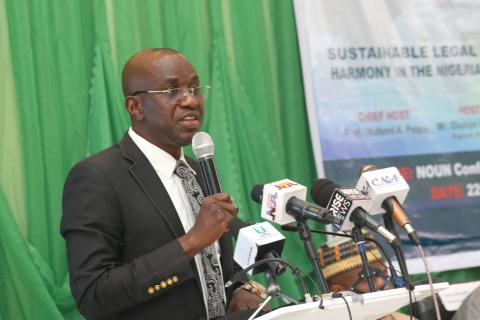
Stakeholders in the education sector have emphasised the roles of听registrars across听the听Nigerian听universities听toward听the revolution of academic institutions
They stated this at a听Second Registrars听Workshop and听the听75th听Business听Meeting held under the theme:听“Sustainable Legal Framework as Panacea for Industrial Harmony in The Nigerian Universities System: Challenges and Remedies,鈥漮rganised by the Association of Registrars of Nigerian Universities (ARNU) in conjunction with the 水果派 of Nigeria (NOUN).
The event, held between April 22 – 27, 2024 at the NOUN headquarters in Abuja welcomed prominent education stakeholders, where in his keynote address, a Senior Advocate of Nigeria (SAN), Professor Dakas C.J. Dakas, said university听registrars serve as the custodians of institutional records, guardians of academic integrity, and stewards of administrative processes.
Their role, according to him,听extends far beyond administrative tasks听as听they are pivotal in shaping the legal framework that governs universities and directly influences industrial harmony within the system.
鈥淚 charge you to deeply reflect, and take concrete action, on innovative ways to engender a future where our universities thrive as beacons of knowledge, innovation, and industrial harmony, bolstered by sustainable legal frameworks.
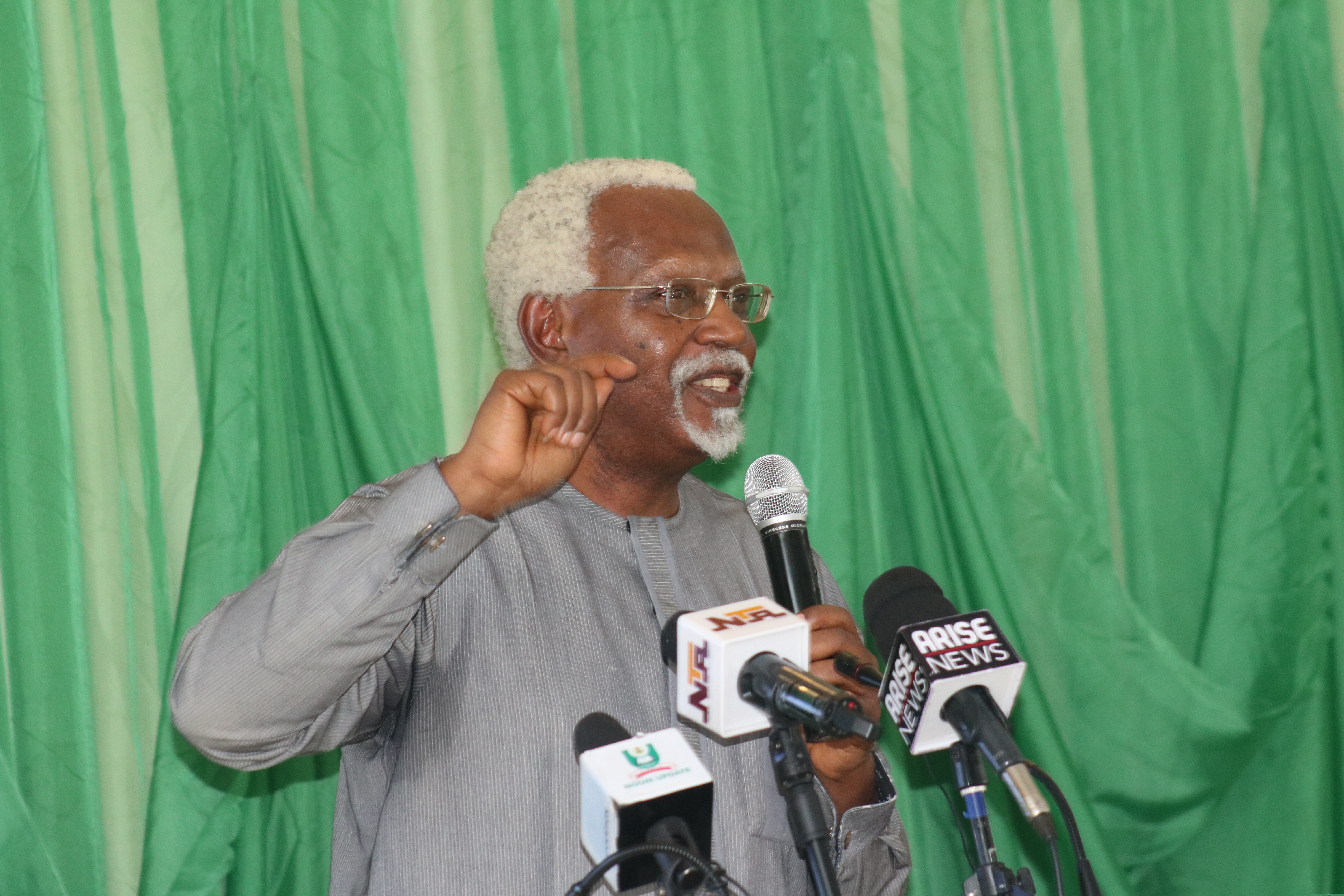
鈥淩egistrars are at the heart of academic integrity. It is in their names that admission letters go out, among many other roles in the听Universities.听You must build the capacity of the young people under you,鈥� Dakas told the gathering.
According to him,听Registrars play a crucial role in shaping the legal landscape of the Nigerian听university听system and fostering industrial harmony.
He acknowledged听challenges听that听exist,听but put hope on听the prospects for success if听they remain听committed to collaboration, innovation, and continuous improvement.
Dakas听also听highlighted some of the key obstacles faced by听university听registrars as: Complex Regulatory Environment, Resource Constraints, Resistance to Change and Conflicting Stakeholder Interests,听among others.

He also emphasised that Strategic Leadership, Capacity Building, Collaborative Governance, Innovative Solutions are some听of the听promising prospects for university听registrars to drive positive change and engender industrial harmony through a sustainable legal framework.
To ensure effectiveness and relevance, the Nigerian听university听system,听which serves as the cornerstone of intellectual development, research, and innovation within the country must operate within a framework that fosters industrial harmony for a delicate balance between the needs of all stakeholders, including students, faculty, administrators, and the government, he said.
鈥淭he heart of this framework lies the concept of sustainability鈥攃reating a system that can endure and thrive in the face of challenges, while also promoting fairness, equity, and progress. The legal framework plays a pivotal role in achieving this goal by providing clear guidelines, mechanisms for dispute resolution, and avenues for continuous improvement,鈥� Dakas added.
On his part, the听Chairman/CEO,听National听Salaries, Incomes and Wages Commission, Ekpo Nta,听in his presentation titled:听鈥淓quitable Reward and Wage System as Catalysts for Quality Service Delivery in the Nigerian University System,鈥澨齭tated that in fashioning out an equitable rewards system as catalysts for quality service delivery in the Nigerian university System several prerequisites have to be in place.
鈥淭hese must largely originate from within the university system, and since it is a human resources schedule, it should be guided by the administrative arm which is the听office of the Registrar,鈥� Nta said.
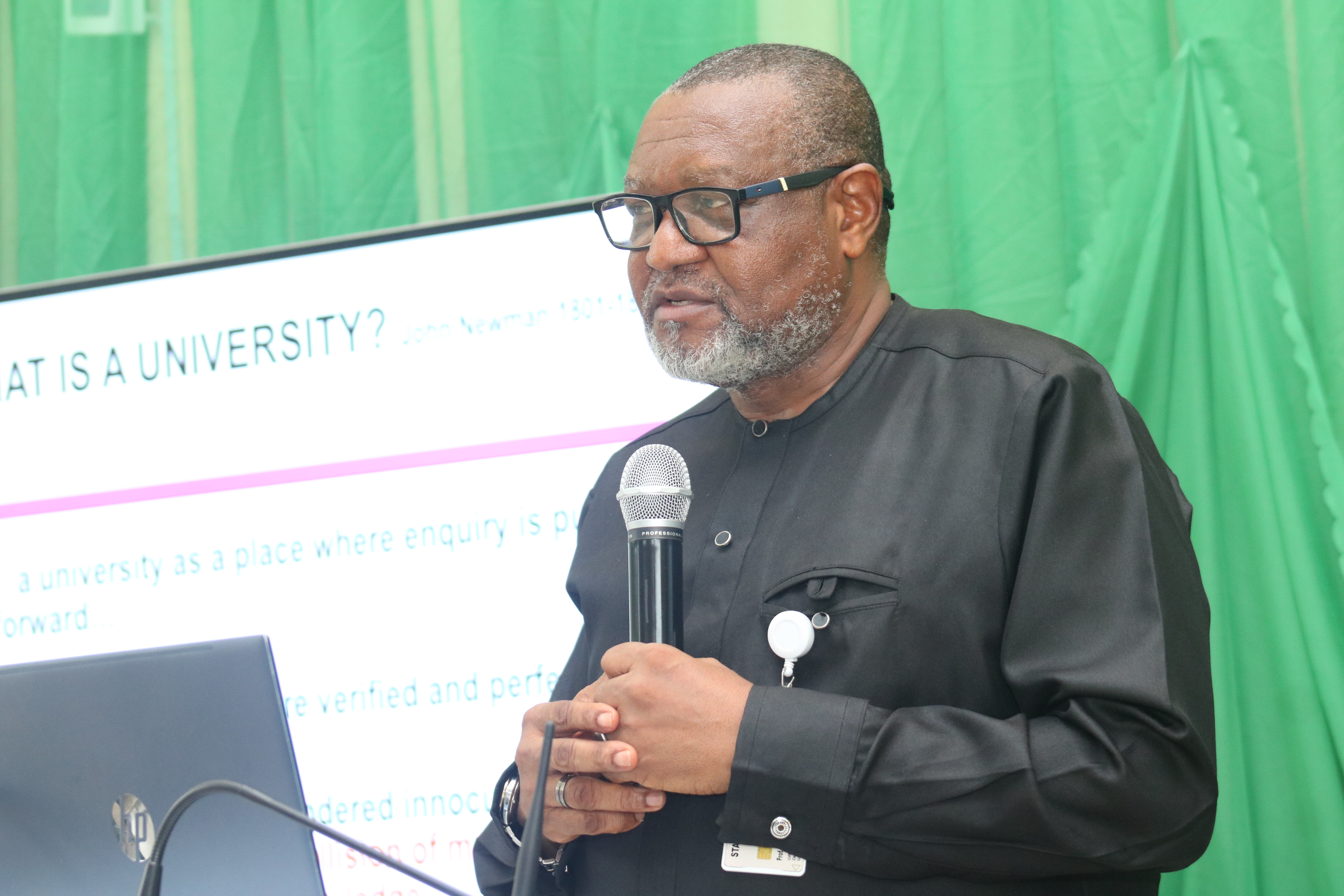
He further stated that听鈥渦niversity staff can earn more than what is currently being paid if the university system re-invents itself to prudently manage its:听available infrastructure 鈥� lands, laboratories, grasses, etc, Manpower, Students and Relationship with industry Strengthen Performance Management and 听Invest in Capacity Building.鈥�
Speaking on his paper titled:听鈥淢anaging听Role听Conflicts in the听Contemporary Nigerian听University听System,鈥漷he听NOUN鈥檚 Deputy Vice-Chancellor, Academic,听Prof. Chiedu Mafiana,听identified common conflicts in high places as:听Authority and Decision-Making, Policy Implementation, Communication Issues, Regulatory Compliance,听among others.
According to Mafiana, managing role conflicts involves听strategies and skills that balance conflicting roles and reduce stress for the ultimate growth of the university.
It is all about limiting the negative aspects of conflict while promoting the positive aspects including problem-solving, new ideas, commitment and better decisions or outcomes.
鈥淩ole conflicts within our university system arise from diverse expectations and responsibilities placed on us by the circumstance of offices we occupy,鈥漢e added.
He highlighted ways to managing the role conflicts as:听Prioritise/Clarify Roles, Flexibility /Adaptability/Support, Open Communication Conflict,听among others.
Other resource persons听include: Director, Institute of Governance and听Policy and Development Studies, Nasarawa State University (NSUK),听Keffi, Prof. Andrew Ezadueyan Zamani,听who presented a paper titled: Revisiting the听Issues of University Administrators 鈥楬ealthy Living in the Milieu of Socio-Economic Challenges in the Nation and Mrs.听Helen Nguper Nyitse, Immediate-past Registrar, Joseph Sarwuan Tarka University, Makurdi, whose presentation was on: Registrars as Custodians of Rules and Regulations Governing Tertiary Institutions in Nigeria: A Critical and Pragmatic Review.
Meanwhile at the end of the workshop, certificate of participation was issued to all participants.