
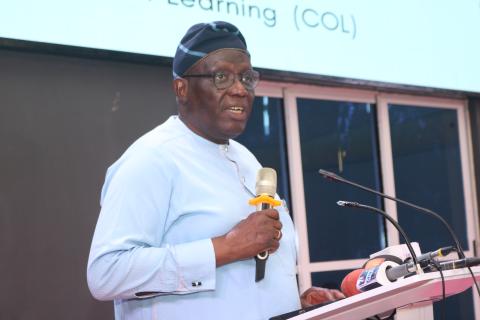
水果派 Vice-Chancellor, Prof. Peters
The Vice-Chancellor,聽水果派 of Nigeria (NOUN), Prof.聽Olufemi Peters, has called on the National Universities Commission (NUC) to formulate clear policies and regulatory frameworks that will support the adoption of micro-credentials in Nigeria鈥檚 education sector.
The Vice-Chancellor聽stated this during the opening ceremony of a聽2-day pre-conference workshop themed: 聽鈥淒eveloping a Commonwealth Credit Transfer Framework: 聽Micro-credentials in a聽Digital聽Age.鈥�
The conference was聽organised by NOUN in collaboration with the Commonwealth of Learning (COL),聽which was between聽May聽13 – 14,聽2025 at NOUN聽headquarters, Jabi-Abuja.
鈥淚 call on the National regulatory bodies and especially the NUC to take the leadership role in formulating nationall-clear definitions, standards and goals, aligning with national education goals and quality assurance measures, that would strengthen micro-credentialing in our country.
鈥淚ntegration of micro-credentials is crucial for the future of education and workforce development. Micro-credentialing is reshaping the landscape of education professional development and increasingly seen as a viable alternative to traditional academic degree structures, 鈥漢e said.
Peters聽warned that the rapid adoption of alternative learning pathways, driven by advancements in AI and digital technologies, could redefine the value of traditional academic qualifications.
鈥淚 am aware there are still some challenges related to recognition and certification, but I am certain micro-credentials will play a critical role in shaping the future of professional education, making them a compelling alternative to traditional academic degrees.
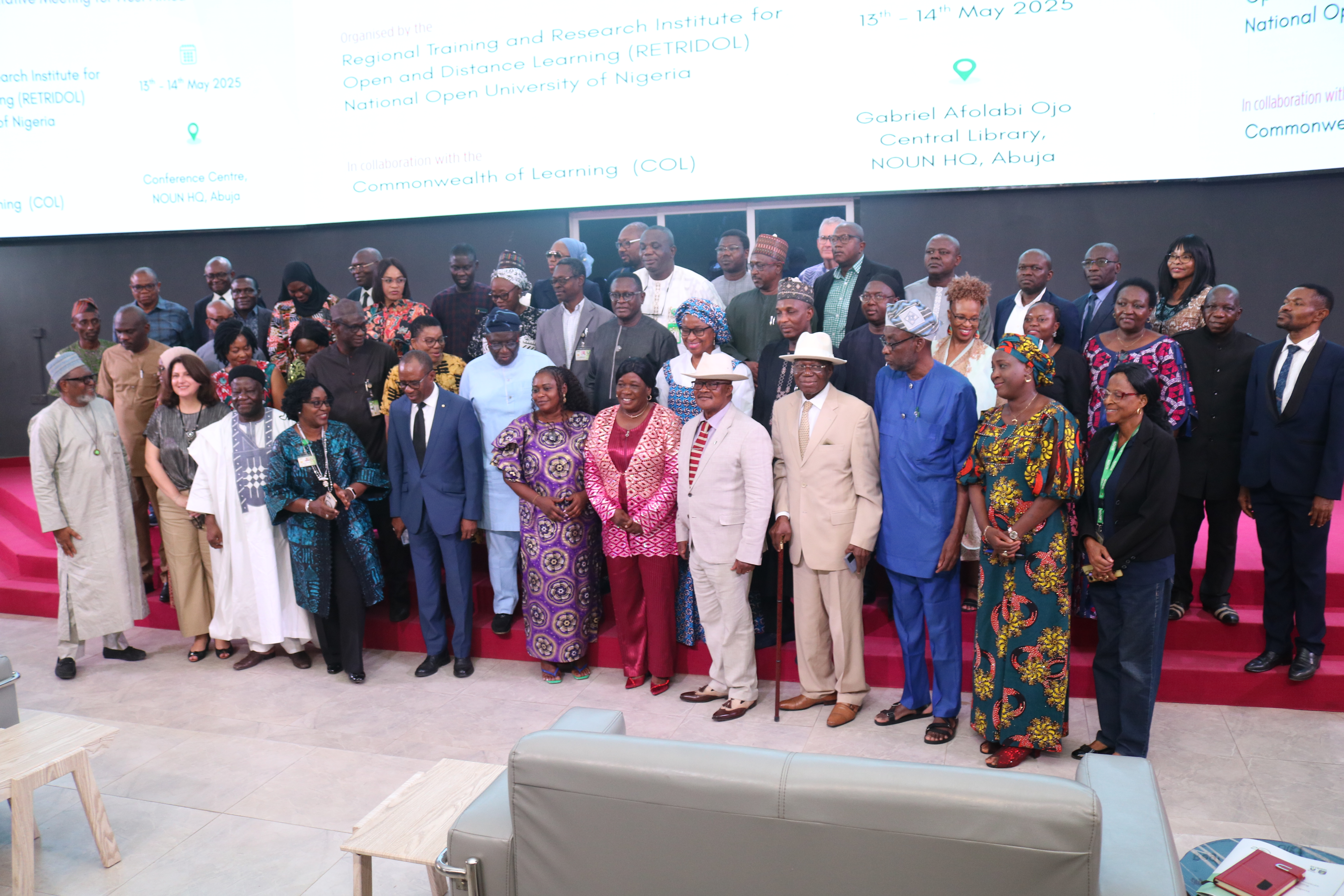
Group photograph at the end of the opening ceremony
鈥淭his is the reason institutions, and national regulatory bodies must seize the initiative to develop policies and regulations that will ensure its relevance to society and the emerging job market,鈥� he said.
The VC聽stressed the need for nationally recognised guidelines to ensure the quality and relevance of micro-credentials, aligning with national education objectives and quality assurance measures.
He聽further called for immediate attention from policymakers and educational institutions to establish clear standards for micro-credentials in the country.
On his part, the President of聽Commonwealth of Learning (COL), Prof.聽Peter Scott in a video message, described micro-credentials as vital tools in an era of rapid technological change and global mobility.
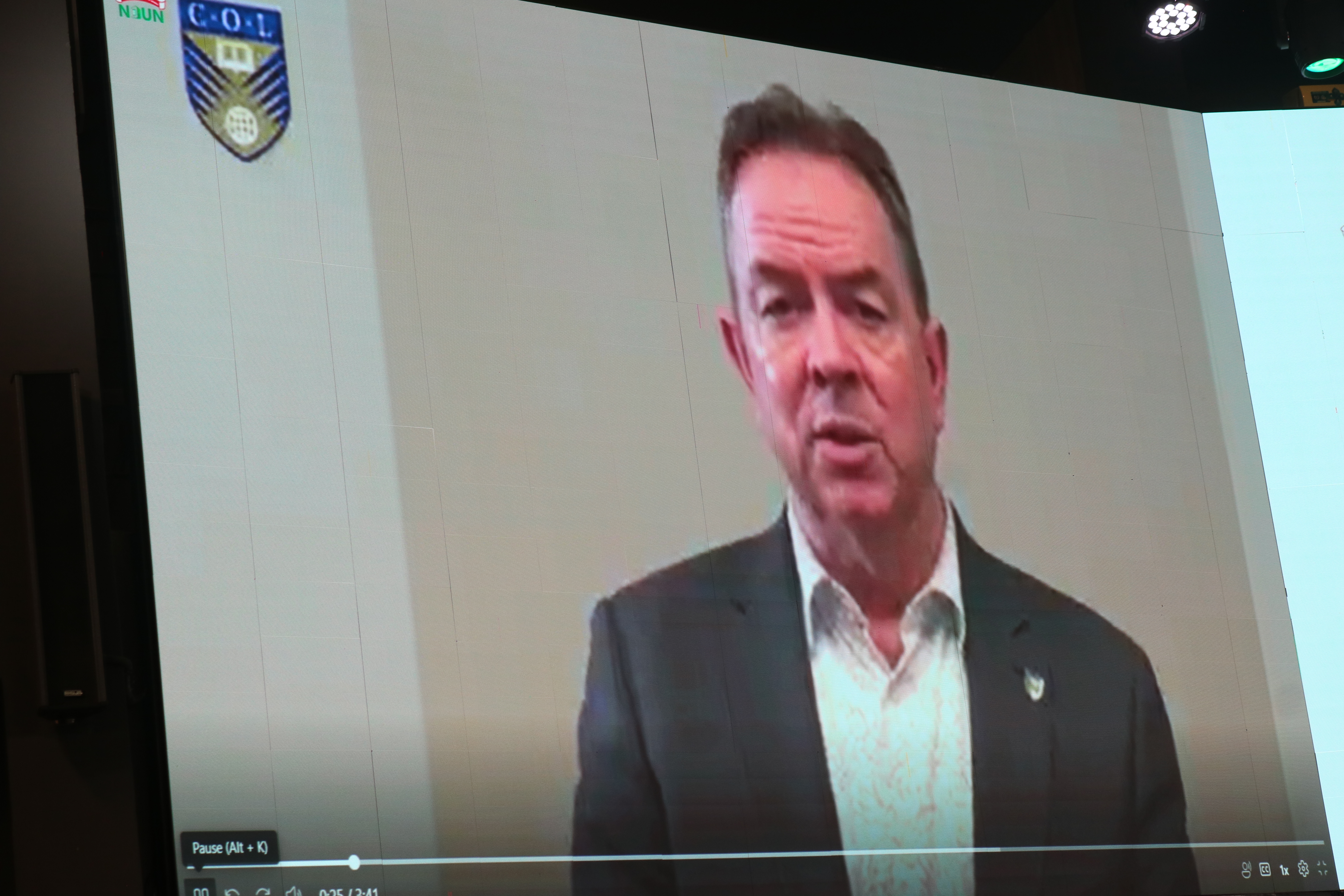
Prof. Peter Scott , President COL
According to Scott, the聽workshop聽was聽鈥渁 vital part of a collective effort to shape the future of education and training across the聽Commonwealth,聽enhancing the portability and recognition of qualifications and treating micro-credentials as shared tools we develop and use together.
鈥淚n an era defined by digital transformation due to increased digitalisation, the use of general artificial intelligence, the global workforce mobility, and indeed the need for continuous learning, micro-credentials have emerged as a flexible and powerful tool.鈥�
The president explained that micro-credentials 鈥渁llow us to bridge skill gaps, to improve employability, and they provide individuals with new pathways to professional growth. However, for micro-credentials to achieve their full potential, they must comply with common standards.
鈥淭hey must be recognised and transferable across institutions, into industries, and through national borders. This is where working together on a common framework really matters. Now, this meeting is not just an opportunity to share insights.
鈥淚t also offers a platform to engage in meaningful discussions, to exchange experiences, and to contribute to a robust credit transfer framework for micro-credentials in the聽Commonwealth that is both inclusive and implementable,鈥� he said.
Director of Education, Science and Culture at the ECOWAS Commission, Dr.聽Roland Kouakou,聽while聽speaking on the significance of harmonisation across borders,聽emphasised the role of micro-credentials and credit transfer systems in enabling educational mobility across the region.
鈥淵ou know, credit transfer is like your son has a, let鈥檚 say, certificate in Nigeria. And you want to go from there in Ghana. How he can take this credit from Nigeria and go to Ghana without losing a year. So, this kind of partnership among the university and partnership is very important.
鈥淪o, you will enhance the mobility of your son from Nigeria to another country. You are going, for example, when you leave Nigeria to UK, sometimes the university, they are trying to see at which level they are going to maybe put you in the university.
鈥淪o, they are trying to see the equivalence from your certificate to their own level. So, in our region, I think that what the聽Commonwealth are doing is very important because you will enhance the mobility of the youth in the region,鈥澛燢ouakou聽said.
In her聽address, Professor Jane-Frances Agbu, Adviser on Higher Education at COL, noted that micro-credentials are increasingly important in enabling quick upskilling and reskilling in the face of evolving workforce demands.
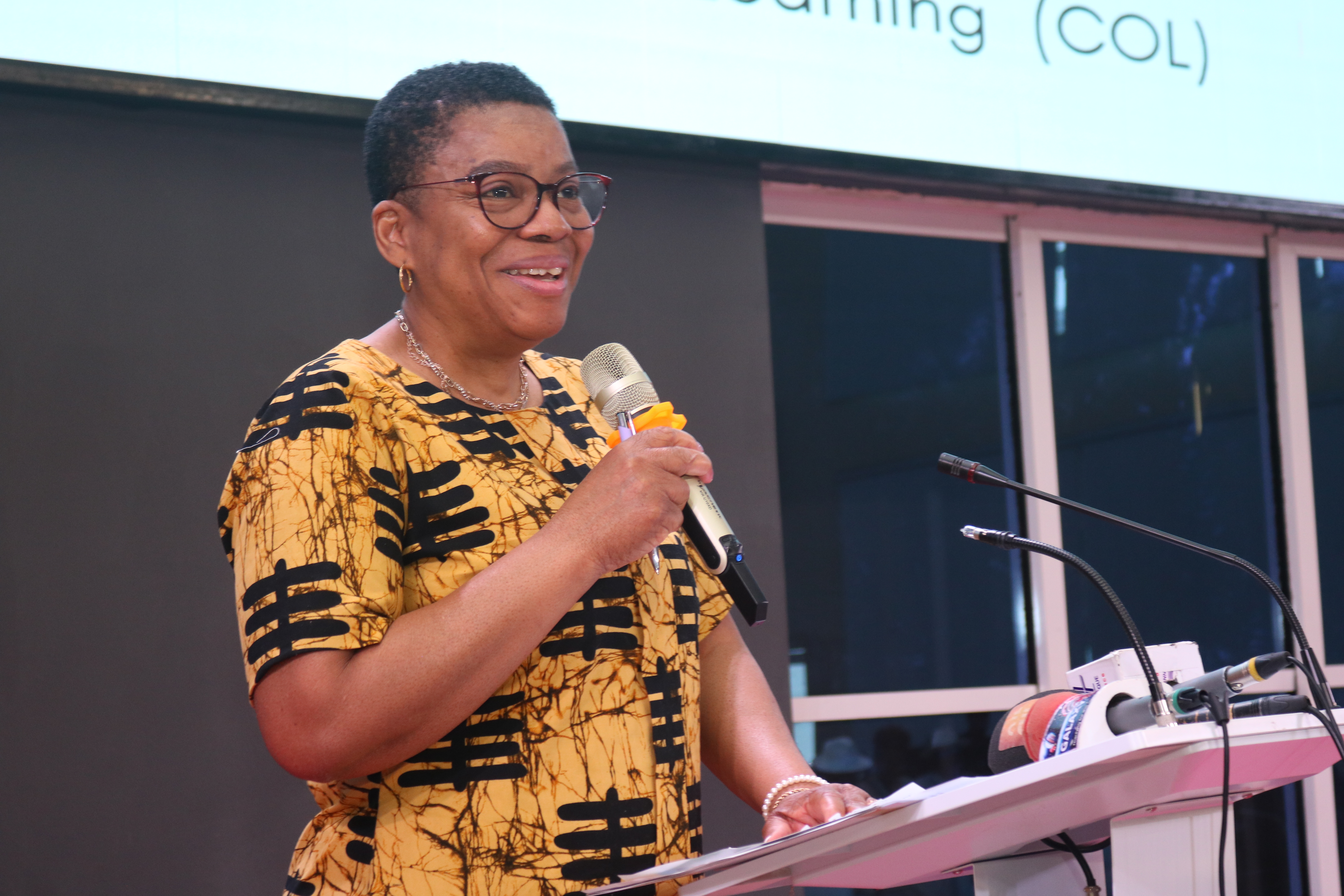
Professor Jane-Frances Agbu, Adviser on Higher Education at COL
Agbu said the event was organised to engage with key national and institutional post-secondary education stakeholders at the regional level; share findings of in-depth reviews of micro-credentialing literature, tools, and practices throughout the聽Commonwealth; determine the national and regional needs in terms of credit transfer and micro-credentialing; and obtain inputs from the stakeholders to inform the draft Commonwealth Credit Transfer Framework for Micro-Credentials.
Earlier in her welcome remarks, the Director, RETRIDOL, Prof. Christine Ofulue,聽said the thrust of the workshop聽was to share findings of in-depth reviews of micro-credentialing literature, tools and practices throughout the聽commonwealth with stakeholders.
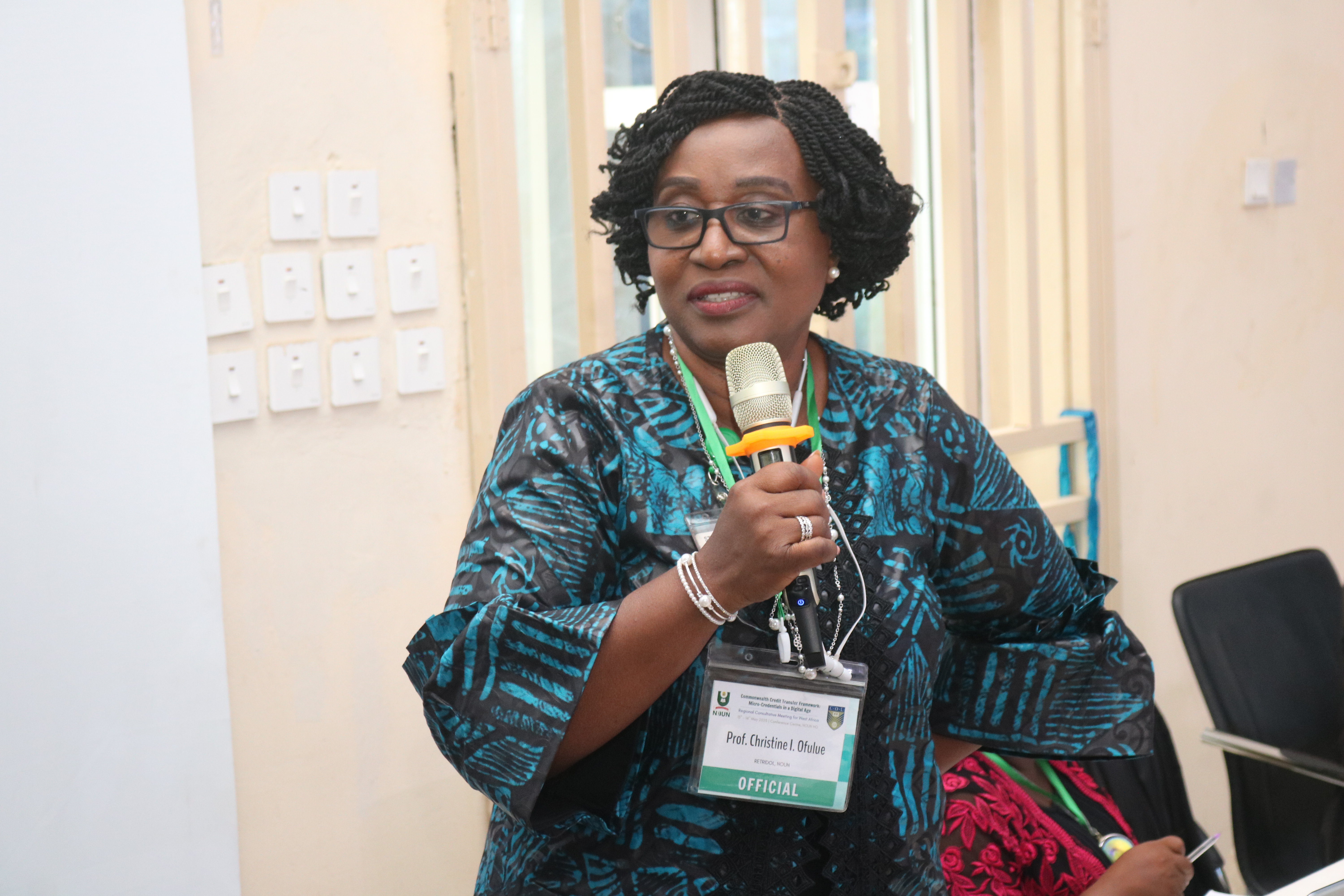
Prof. Christine Ofulue, Director,NOUN- RETRIDOL
The workshop was to also determine the national and regional needs in terms of credit transfer and micro-credentialing, obtain inputs from stakeholders to inform the draft Commonwealth Credit Transfer Framework for Micro-Credentials, among others.
She further stressed that the meeting would focus on drafting a Commonwealth聽Credit聽Transfer聽Framework specifically designed for micro-credentials.
鈥淭his framework聽would be developed through an inclusive consultation process, ensuring that diverse viewpoints and expertise are integrated into the final document,鈥� Ofulue said.
The framework, she noted, would facilitate the recognition and transfer of micro-credentials across institutions and borders within the聽Commonwealth, thereby enhancing mobility and opportunities for learners.
Ofulue also emphasised on the need for a unified continental framework to facilitate credential recognition across borders.
鈥淭he current difficulties that we have in recognising credentials from other countries, both from here and in West Africa, will be a thing of the past. When this framework is done, we will have an instrument that will enable the different countries to be able to properly recognise and properly situate credentials, depending on where you are from,鈥� she said.
She noted that the framework is expected to be finalised within a year.
The workshop 聽witnessed participants from African countries, including Nigeria, Ghana, The Gambia, Sierra Leone, Cameroon聽and聽Togo all of which are exploring collaborative strategies for the standardisation of micro-credential systems on the continent.