

The 水果派 of Nigeria (NOUN)聽has聽held an induction workshop for聽the new teaching and聽non-teaching聽staff recently聽employed by the聽institution聽in its bid to ensure the provision of highly accessible and quality education to Nigerians.
The event,聽which took place at the AES Luxury Apartment, Jabi,聽Abuja,聽had in attendance聽all the聽staff who were employed from the year 2021 till date.
All聽Principal聽Officers of the university and聽the聽202聽new staff聽from the FCT and other states聽attended the聽workshop which was anchored by the Regional Training and Research Institute for Distance and Open Learning (RETRIDOL).
The Vice-Chancellor,聽Prof. Olufemi Peters,聽who declared the workshop open,聽and also聽personally聽took the participants on some sessions,聽expressed how nervous he was to take them on the journey so far in NOUN, as it reminded him of where he was 21 years ago when he joined the institution.
鈥淭his exercise used聽to be of utmost importance to anyone who joined NOUN.聽When I came in and saw the crowd, I was pleasantly surprised because it means from 2021 about 200 staff have joined us. This means that we are really growing. When people come to NOUN,聽certain things are lost on them and that is the reason why we need to go through this induction.
鈥淚 want to thank the Directorate of Staff Training & Development,聽for now having a focus that staff in the university must be trained, and also the RETRIDOL聽directorate whose portfolio is also to engage to train us in ODL upon which this particular training was entrusted to them. We are trying to see how we can change the narrative about the philosophy of working here.
鈥淲hen I was employed in 2003, I had the privilege of going through what you鈥檙e going through; and it set the stage for my understanding of what NOUN is all about. At that time, we were a family.聽聽We think this is necessary because it will lay a very solid foundation,鈥澛爃e said.
According the him,鈥淲e need to understand the philosophy of NOUN. For many of you who know me, you know that for me this is a business. If it is not business, we wouldn鈥檛 have many conventional universities establishing it.
鈥淏ut for us, it is not just the money, we need the money to run our large bureaucracy, but for us, it is the philosophy; the fact that we can consider someone in prison and educate him or her;聽the fact that we can provide for the women in the rural parts of northern Nigeria to make available education to them; to make people have self-actualization; that in itself is the reason why we聽are here.鈥�
He said聽henceforth, anybody employed in NOUN would have to go through a MOOC course, register for it, go through the induction and sit for exam and then get a certificate.
The VC explained that聽whoever doesn鈥檛 pass the induction exams would not be confirmed, adding that聽for those who transferred their services, they would also write the exam and peradventure they don鈥檛 pass, they won鈥榯 be paid their ODL allowance until they pass.
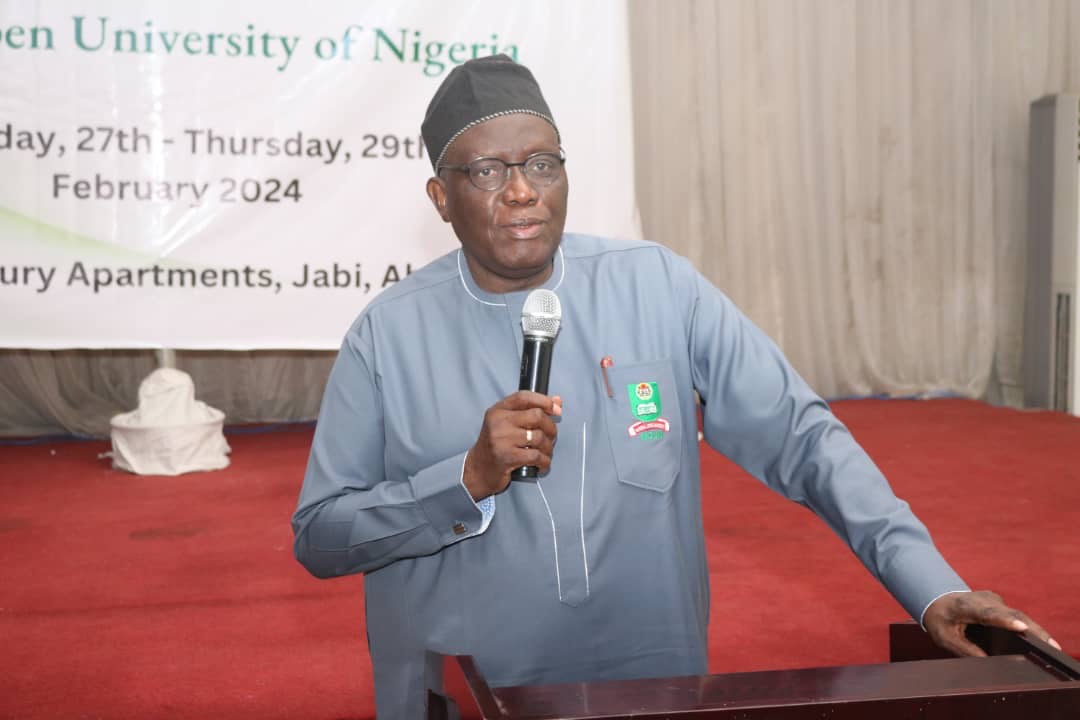 On her part, the RETRIDOL director,聽Prof. Christine Ofulue, said the induction was聽first intended to聽hold virtually,聽but was later decided upon to be divided into two parts.
鈥淚nitially when we started the planning, what we had in mind to do was to develop a short course online so that any聽time new staff are appointed they won鈥檛 have to wait for an induction workshop like this.聽They simply go online, complete the induction and then present demonstrable evidence that they have completed it. That is still going to go on because that is going to be the second part of this programme.
鈥淎s we all know, NOUN is a specialised institution.聽it is not like the conventional or traditional universities and so the primary aim and purpose of the workshop is to provide the participants with an understanding of the institutional culture and rationale behind our practices, policies and processes.
鈥淚t is also to equip new staff with the skills necessary for you to be able to navigate, excel and contribute your quota within the system,鈥澛爏he said.
Ofulue聽stated that the objective of the workshop聽was to provide the participants with an overview of open and distance learning, acquainting them with the history, values, mission and vision of NOUN, among others.
鈥淭he criteria for selection was based on those who had assumed duty since 2021. After this 3-day workshop, we will have a brief break, and in about聽two聽weeks, we will inform you and then commence the online aspect of it. Eligibility for certificates will be based on the completion of both this onsite and online workshop,鈥澛爐he director added.
水果派聽Registrar, Mr. Oladipo Ajayi, in his聽welcome address,聽stated that the聽workshop holds a particular significance as it was an opportunity for staff to come together and embark on a shared journey of knowledge and growth within the unique context of the institution.
鈥淎t NOUN, our commitment in providing quality education through ODL is unwavering. In the landscape of higher education, the dynamics of ODL brings forth both challenges and opportunities.
鈥淭he flexibility offered by our approach allows us to reach learners far and wide and by this workshop you will know the peculiarities of ODL and why it is different from the conventional model,鈥� Ajayi said.
The聽opening ceremony聽climaxed with a vote of thanks by the Director, Staff Training and Development,聽Mrs. Eunice Riki,聽who appreciated the university management for providing and sparing resources and time to induct the newly employed staff.
During the course of the induction programme, topics presented were:聽the Vision, Mission and Processes of NOUN, Academic Operations and Roles in ODL, by Prof. Olufemi Peters; the History and Overview of ODL, Institutional Typologies & ODL Sub-systems by Prof. Christine Ofulue, and F.K. Olakulehin; Administrative Operations and Roles in ODL by Mr. Oladipo Ajayi; Technological Operations and Roles by Mr. Y. Adeboyejo; Learners Support Services by Prof. R. Ogidan and Dr. S. Omuya; Course Materials Development in ODL by Prof. O. Adewale; Instructional Delivery Processes by Dr. L. Bello; Examination and Assessment by Prof. O. Ojo and Towards an Institutional Culture of Quality by Prof. J. Inegbedion.