
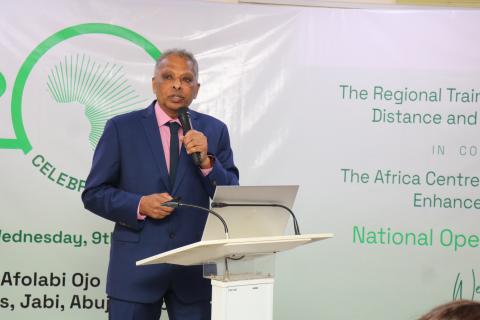
As the global education system continues to gravitate towards more online learning and less in-person classroom time,聽a聽Principal Associate, Technology, Education and Design Associates, Melbourne, Australia,聽Prof.聽Som Naidu,聽has advocated聽for the聽evaluation of teaching approach and student learning experience.
Naidu聽said such evaluation requires a fundamental change in approach to one that shifts the focus from surface features to deeper structures of teaching.
“For a future-focussed education, rethink and recalibration of educational as well as institutional choreographies is required,”聽he said.
The Principal Associate聽made this known on Tuesday, August 8, 2023 during a聽2-day聽Guest聽Lecture and聽Round-table聽Discussion聽to聽commemorate the聽Regional Training and Research Institute for Distance and Open Learning鈥檚聽(RETRIDOL),聽two decades of existence,聽in collaboration with The African聽Centre of Excellence聽on聽Technology Enhanced Learning (ACETEL),聽held at the聽水果派 of Nigeria (NOUN)聽headquarters, Jabi, Abuja.
Speaking on the topic, ‘Reimagining Education Futures at the Intersections of Technology, Education, and Design,鈥漀aidu said “It is not just campus spaces that are changing; all university functions are being reimagined, which is creating demand for new and expanded digital services in teaching, research and administration.
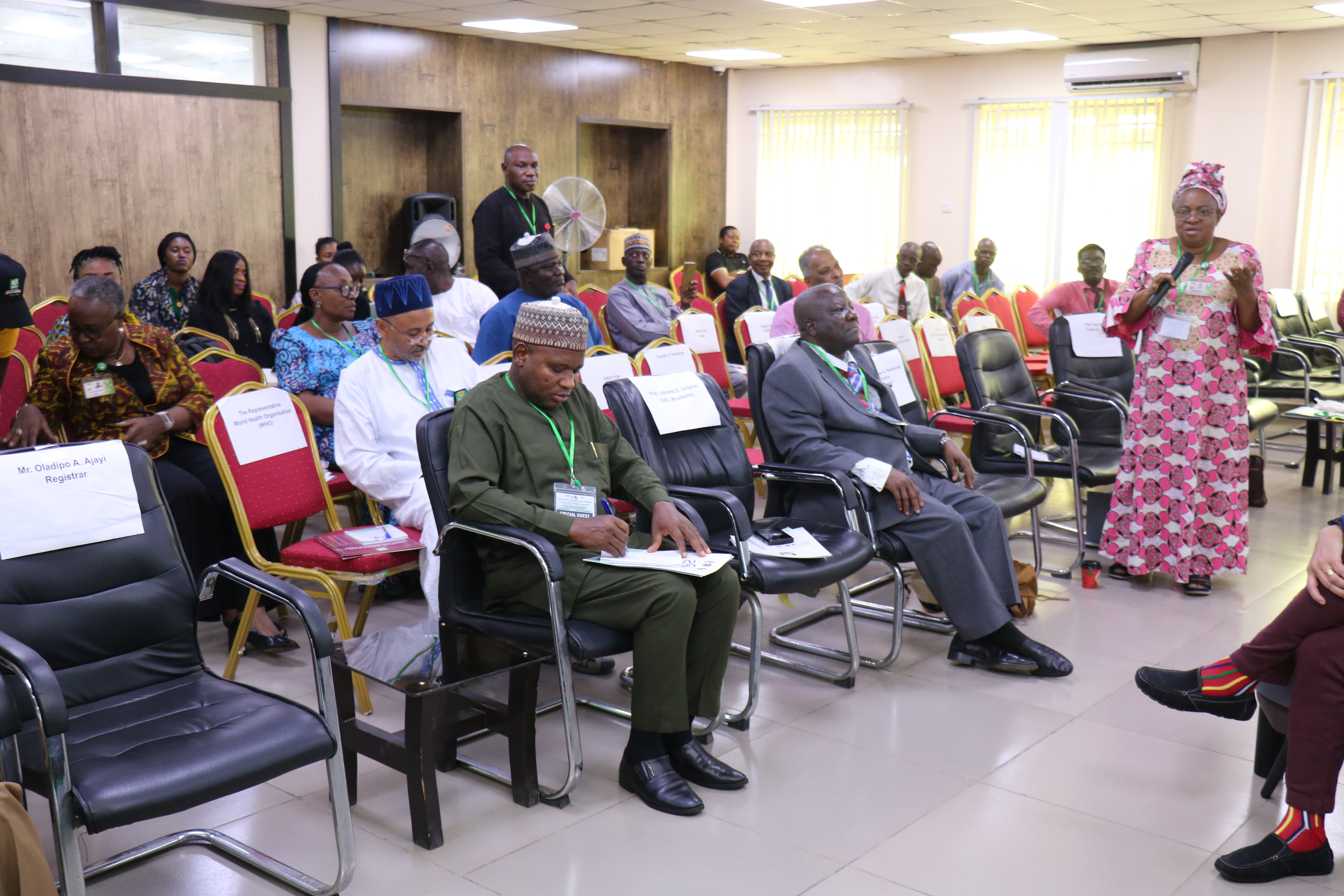
“A more rigorous approach must include a focus on more than one鈥檚 teaching actions. In order to achieve this focus, evaluations of teaching need to focus on its design, efficiency, effectiveness and its capacity to engage.”
According to the renowned educationist, design comprises a consideration of the underlying intentions and beliefs about teaching, while efficiency is about the execution of the designed learning and teaching experiences.
The erudite scholar added that effectiveness is concerned with the impacts and results of teaching on students and their learning experiences while capacity to engage is determined by the teacher鈥檚 ability to articulate clear learning outcomes, design challenging learning experiences for their achievement, and identify and collect suitable learning resources which altogether have the potential to motivate learners and promote engagement with the learning experience.
On the roles of education, he said: “Education for all is fundamental to creating a peaceful and prosperous world. Education gives people the knowledge and skills they need to stay healthy, get jobs and foster tolerance.鈥�
Continuing, Naidu said that the tools and technologies available to teachers will continue to be changing, both in the conventional classrooms, and in the distance education and online world.
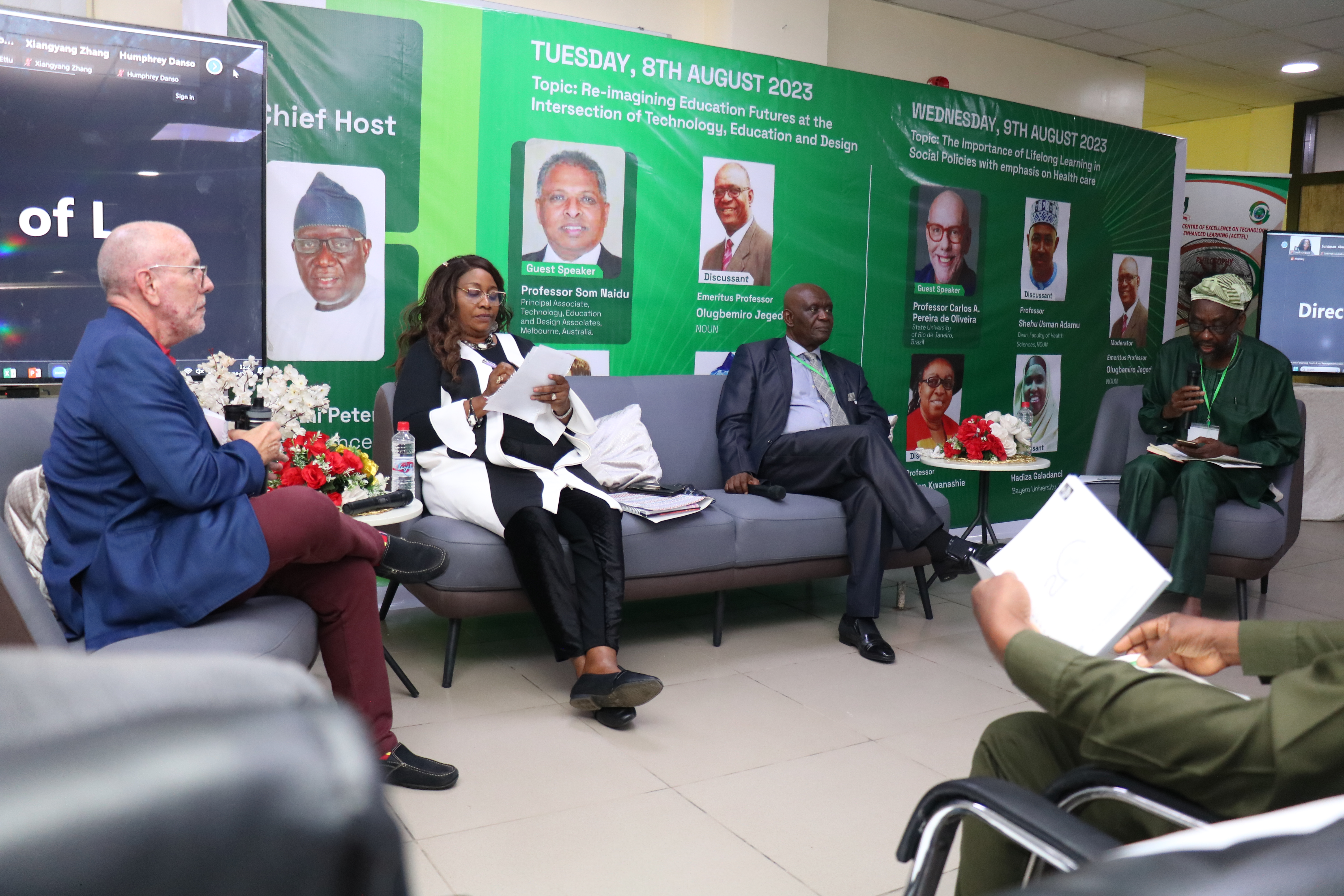 L-R:聽Professor Carlos A. Pereira d Oliveir,Prof. Mercy Ogunshola andEmeritus Professor Olugbemiro Jegede (Discussants),Prof. Francis Egbokahre (moderator)
“In this regard teachers will always have to be up-skilling themselves in order to be effective and efficient, and making the most of the affordances of contemporary tools and technologies regardless of their educational context,”聽he said.
Highlight of the 20th聽Anniversary聽event聽was the聽Round-table聽Discussion,聽which had erudite personalities, likes of Emeritus Professor Olugbemiro Jegede,Professor Carlos A. Pereira d Oliveira and Prof. Mercy Ogunshola, 聽as discussants,聽while Prof. Francis Egbokahre as the moderator.
Some of the response key points from the discussants include:聽the need to develop content and design that can help students apply them in聽the聽fast-changing world, teachers must change, learners must change, and classrooms must change. The new norm after Covid-19 is changing as already pointed out in the lecture.
Adopting the use of technology appropriately to achieve desired goals, educational聽curriculum must be designed to meet the teacher/learner ratio to reduce the workload, was also pointed out.