
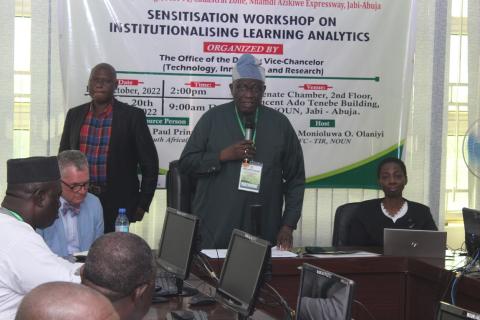
VC delivering his opening address
The Vice-Chancellor,聽水果派 of Nigeria (NOUN),聽Prof.聽Olufemi Peters,聽has challenged the academics of the university to develop themselves in the concept of learning analytics, an emerging field of research in enhancing the visibility of the university.
Peters disclosed this on Monday, October 17, 2022 during聽the聽opening ceremony of a 4-day聽sensitisation workshop on Institutionalising Learning Analytics.
It was聽organised by the office of the Deputy Vice-Chancellor, Technology, Innovation & Research聽(DVC-TIR),聽Prof.聽Monioluwa Olaniyi at the university’s headquarters, Jabi, Abuja.
According to the VC, the sensitisation workshop聽was very imperative and聽would聽seek to answer questions pertaining聽on 鈥渉ow we would ensure success of Open Distance Learning (ODL) research and achieve results that would help drive our process and improve our services, amongst others.鈥�
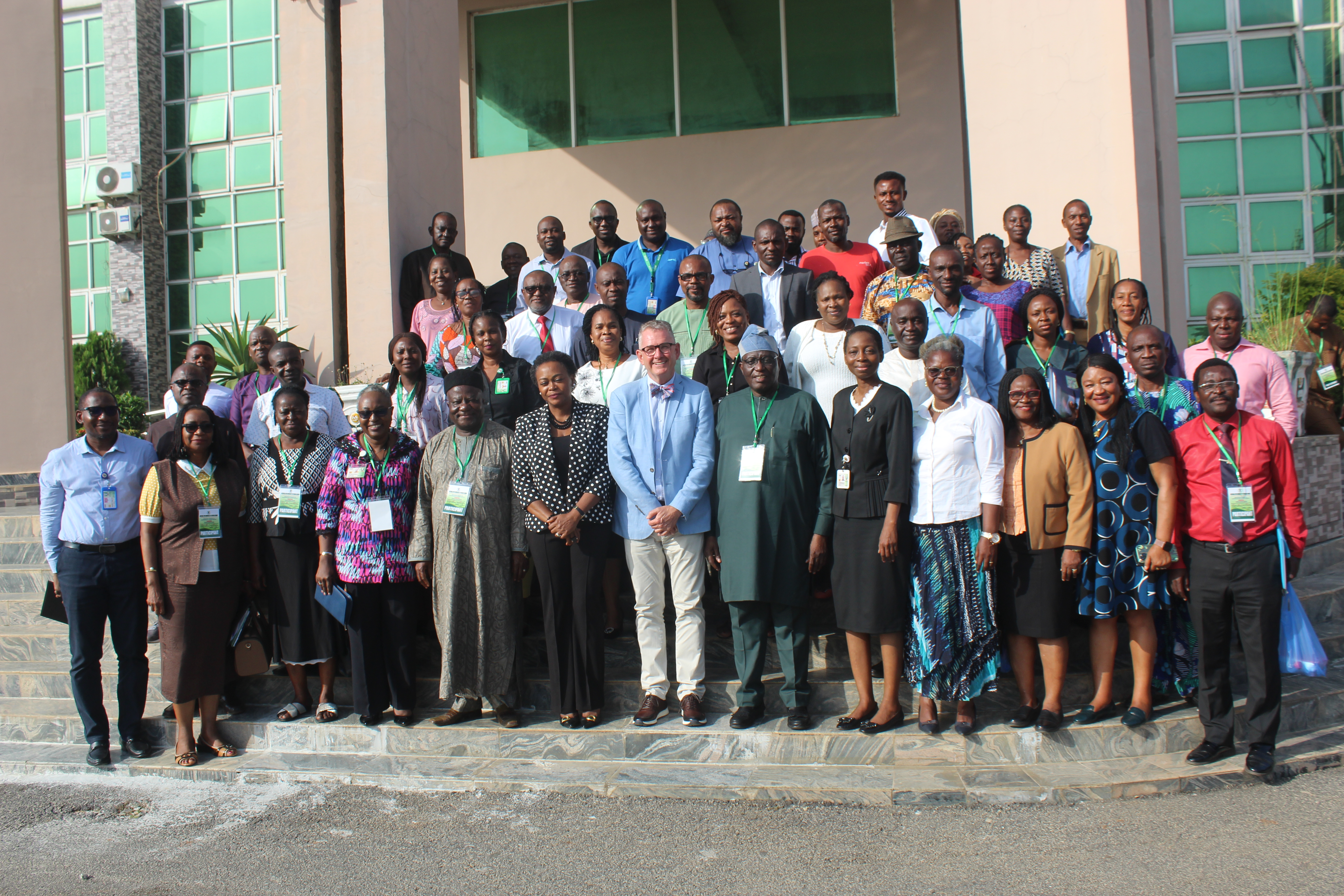
Group picture of the participants with the VC
He聽expressed optimism that聽workshop聽will聽鈥渂irth a framework that would help us better define our workshop targeted with clear milestones as we work assiduously to achieve the goals of attaining聽one聽million students鈥� enrolment, top class service delivery and student satisfaction.
鈥淚 particularly challenge our academics to explore the opportunities of the large data pool available in our university, to contribute to our data-driven development through research as well聽as聽their own professional development that would result from publication in rated journals. This will also help improve their rating as among peers and also enhance the university鈥檚 global visibility.
鈥淚 implore you to take advantage of this useful workshop to develop yourself in the concept of learning analytics.
鈥淚t is my hope that in this workshop all stakeholders聽will participate actively and together we will agree to the direction we should go.聽This will ensure that we work as a team, knowing what we want to achieve and collectively work towards it in our respective unit.鈥�
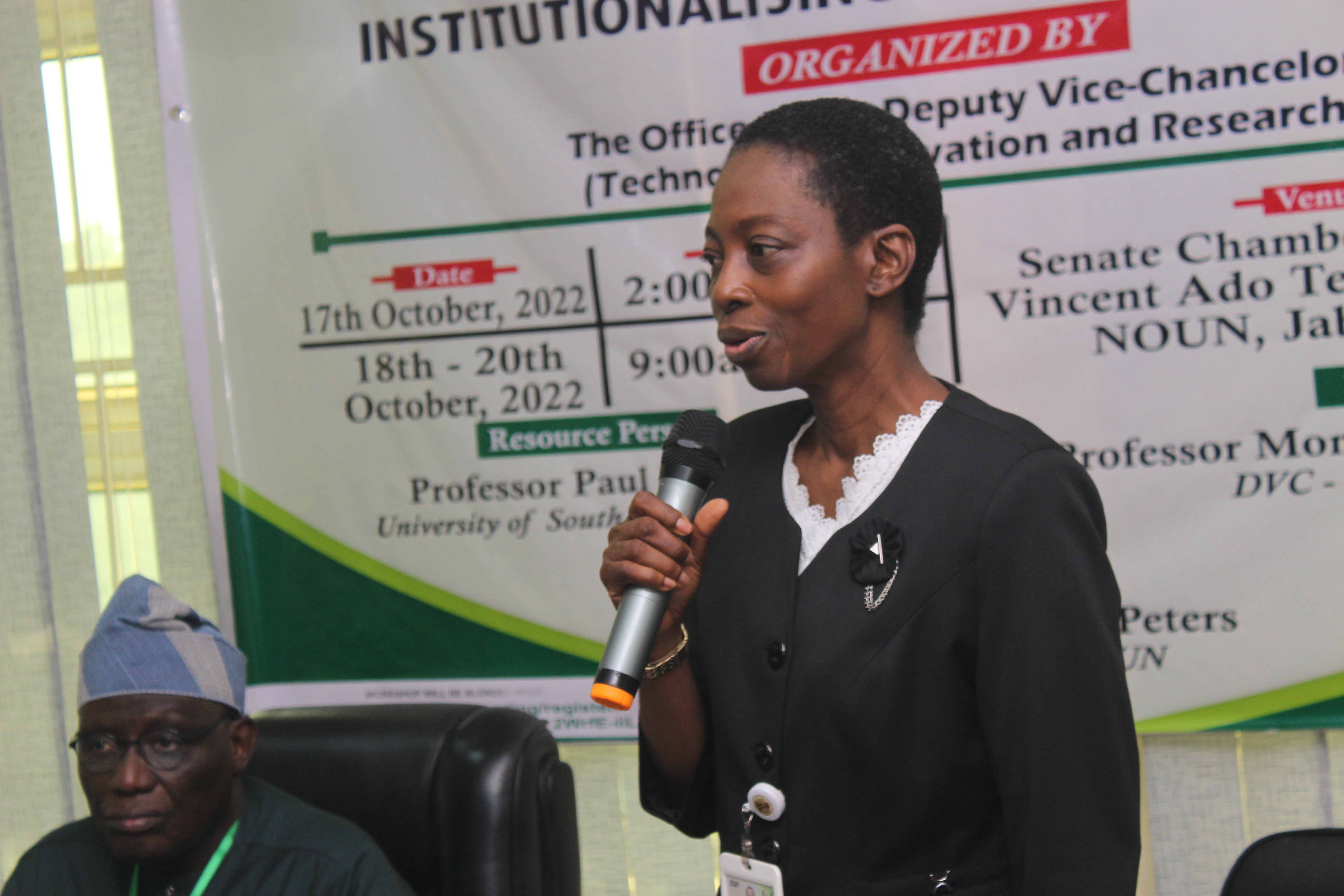
DVC-TIR, Prof.Monioluwa Olaniyi delivering her address
The Vice-Chancellor聽commended the resource person聽from UNISA聽who offered his services as contribution to community service and development of NOUN.聽鈥淲e hope for a rewarding and long-interaction with him in UNISA.鈥�
In her address,聽Prof.聽Olaniyi said the general focus of learning analytics is to use data to generate insight that can lead to action, saying that there are common learning analytics data and computational approaches that would be helpful in research.
鈥淲e are technology-driven at the 水果派 of Nigeria and hence, should be resourceful and innovative, while driving our processes through a research-based system,鈥漷he DVC said.
According to her, the workshop聽had the聽Vice-Chancellor and聽management鈥檚 high result expectations,聽鈥渟uch that we would be able to work together as stakeholders in the NOUN-project, ensure quality service delivery and meet the target of the Vice-Chancellor鈥檚 vision of a one million student population before 2026 with higher completion rate of the registered students.
鈥淚 see this workshop as strategic to our operations as a university, and I encourage you to learn and actively participate in the activities.鈥�
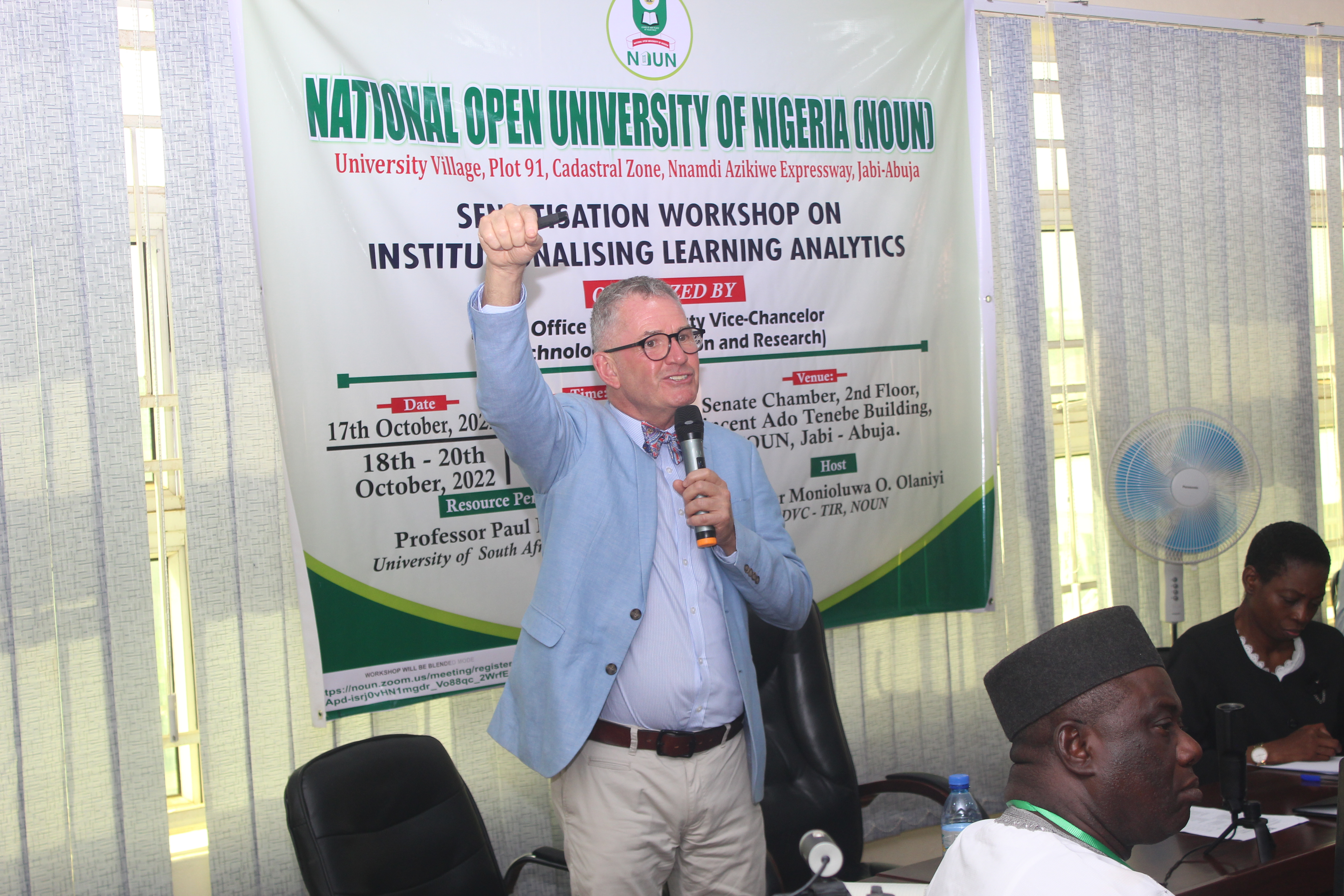
Professor Paul Prinsloo presenting his paper
She聽thanked the Vice-Chancellor, whom聽she described as 鈥渁miable and business minded鈥漟or approving the logistics for the workshop聽and 鈥済iving聽us聽the opportunity to up our skills and key in聽to trends that would impact positively on our professional and institutional development.鈥�
The聽ongoing聽workshop,聽is both in-person and online as the聽proposed聽framework shall be presented to the Vice-Chancellor and Management at the end of the聽interaction.
In his presentation titled 鈥淪tudent聽Success in聽Open聽Distance聽Learning:聽What聽We聽Know,聽Should聽Know and聽May聽Never聽Know,鈥� the resource person, a聽research professor in ODL, College of Economic and Management Sciences,聽University of South Africa (UNISA),聽Paul Prinsloo, identified聽some聽critical points聽necessary聽for understanding student success.
Prinsloo said聽鈥渟tudent retention is a complex, layered and dynamic set of events, international models are not necessarily appropriate to African higher education. In particular, they do not adequately recognise: The legacies of colonialism 鈥� socio-economic, education and the need for redress; The increasing digitalisation and datafication of higher education,聽the particularly challenging socio-economic; circumstances facing our heterogeneous and largely part-time and disadvantaged student body.鈥�