
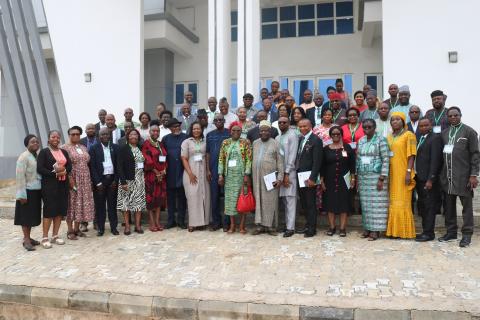
Sequel to the ongoing聽global聽concern of graduate employability in Higher Education Institutions (HIEs), stakeholders in education sector have聽recognised the need for graduates to be equipped with relevant skills and competencies to meet market demands.
This, they said,聽has become imperative in ensuring聽that聽graduates are not only academically proficient but also equipped with practical skills and industry-relevant knowledge to thrive in the competitive job market and contribute to regional socio-economic development.
This formed the thrust of discussion at a 2-day training workshop with theme:聽鈥淒evelopment of Graduate Employability Framework for Directors of Academic Planning of Dual-Mode HEIs聽in West Africa,鈥漮rganised by聽the聽Regional Training and Research Institute for Distance and Open Learning (RETRIDOL-NOUN) in collaboration with The Commonwealth of Learning (COL).
The workshop was聽held聽between May聽16 -17,聽2024, at the 水果派 of Nigeria (NOUN)聽headquarters in Abuja, Nigeria.
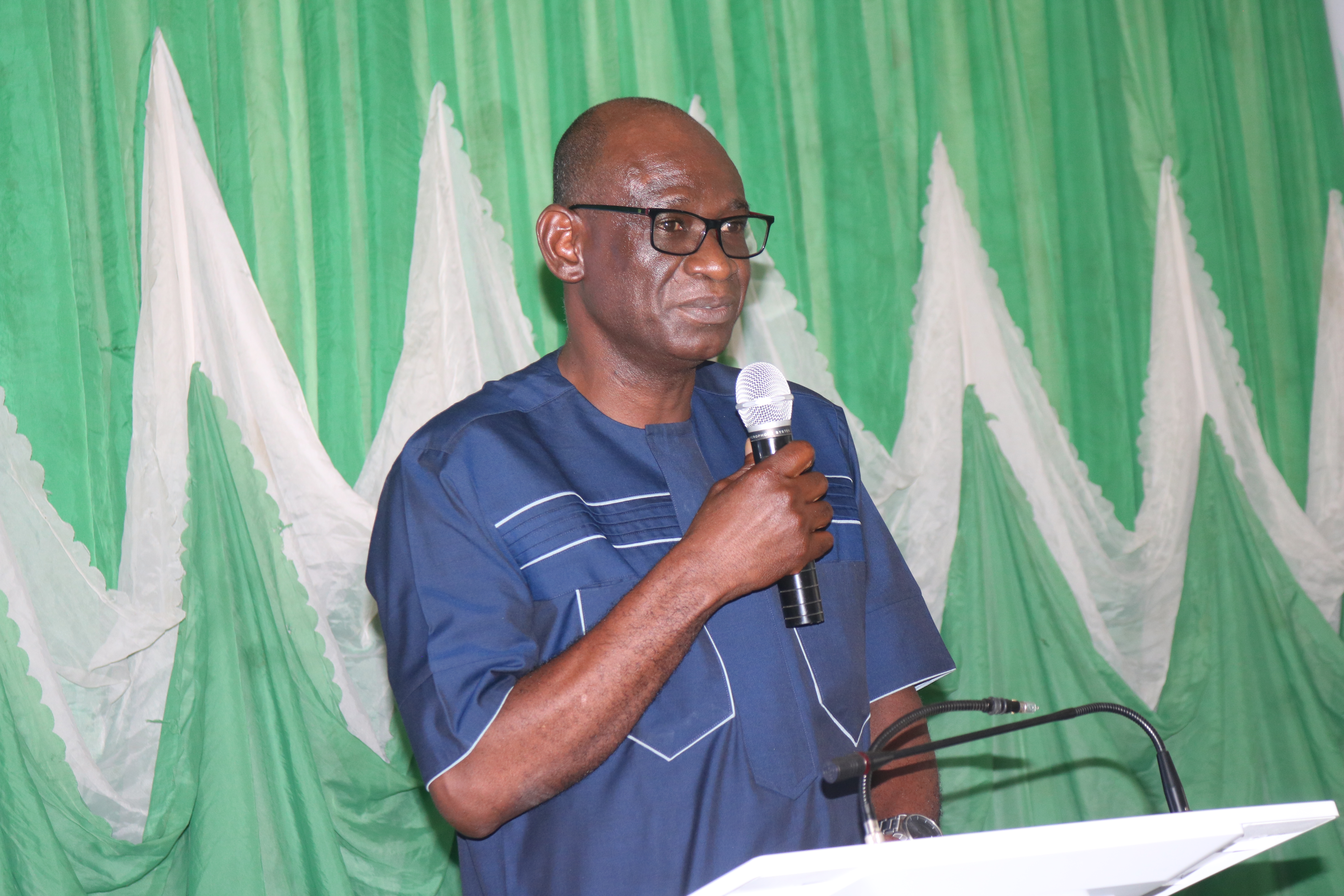
Prof. Godwin Akper (DVC TIR) representing Prof.Olufemi Peters (VC-NOUN)
The event聽aimed at聽equipping participants with the knowledge and skills to develop and implement effective employability frameworks tailored to the unique context of their institutions.
It聽brought together stakeholders,聽academicians,聽and聽directors of Academic Planning of Dual-Mode HEIs in West Africa.
In his welcome address,聽NOUN聽Vice-Chancellor, Prof.聽Olufemi Peters encouraged聽participants to make use of the opportunity provided by RETRIDOL in collaboration with COL to add knowledge.
Peters聽said聽RETRIDOL-NOUN continues to play a pivotal role in capacity building and enhancing graduate employability in the sub-region.
鈥淭o all the Directors of Academic Planning who are participants at this workshop, you have been entrusted with the critical task of shaping institutional frameworks.聽It is my hope that this workshop will both benefit from as well as enrich your expertise, paving the way for the development of robust employability frameworks that will produce well-rounded graduates, essential for sustainable development of our nations,鈥漢e聽said.
The Vice-Chancellor, represented by the Deputy Vice-Chancellor,聽TIR, Prof. Godwin Akper, said employability has become an increasingly important consideration for HEIs especially in this age of rapid change and innovation.
鈥淎s we engage in deliberations on developing a framework tailored to HEIs utilising聽Open and聽Distance聽Learning, it鈥檚 crucial to acknowledge the unique characteristics of our student population. Many of our students are actively involved in various vocations, leveraging the flexibility offered by this mode of learning.
鈥淚t is imperative,聽therefore, to consider the diverse opportunities available to them within this educational landscape as we shape our framework.
鈥淣OUN has embraced the challenge. Our proactive approach includes the development of an employability strategy in聽2021, aimed at integrating employability skills across all our programmes.
鈥淭his move is in addition to initiatives like students Industrial Work Experience Scheme (SIWES) for which NOUN established a directorate in 2012 and the聽Directorate for聽Entrepreneurship and聽General聽Studies (DE&GS) underscoring our commitment to preparing students for the future of work,鈥漢e added.
Earlier in her opening remarks, the聽Director,聽RETRIDOL, Prof. Christine Ofulue, said the workshop聽was particularly timely as it聽tried to聽address the pressing issue of graduate employability.
According to her, it is a聽challenge faced by HEIs amidst the rapidly evolving landscapes of higher education and the workplace, influenced by technological advancements.
Ofulue,聽represented by聽Director, Quality Assurance, Prof. Juliet Inegbedion, said the objectives of the workshop聽were:聽Exploring the聽best practices to integrate industry-relevant skills, design impactful programmes and leverage data for continuous improvement, facilitate knowledge sharing and create a support network among participating institutions to advance graduate employability, among others.
Speaking on the expected outcome, Ofulue said at the end of the workshop, participants would have identified employability skills that would enhance university graduate performance across all programmes of study;聽developed graduate employability strategies that meet the needs of the learners, labour market and society.
the director聽appreciated the two distinguished resource persons,聽who would聽take the participants through the route of the workshop:聽Prof Juliet Inegbedion from NOUN, whose involvement in developing and implementing NOUN鈥檚 employability strategy brought an聽invaluable expertise and Barrister Christian Ugwuala form Abuja聽Chamber of Commerce and Industry, whose extensive experience in the industrial sector would聽undoubtedly enrich the discussion.
On her part,聽COL adviser to education, Prof. Jane-Frances Agbu,聽said the COL recognises the imperative to enhance graduate employability in West Africa, particularly within the context of dual-mode HEIs.
Giving a brief insight on COL, Agbu said COL was created by Commonwealth Heads of Government in 1987 with the aim of promoting the development and sharing of open learning and distance education knowledge, resources and technologies.
According to her, COL provides greater access to quality education and training through open, distance, and technology-enabled learning, thereby allowing improved livelihoods, greater gender equity, and overall economic, social, and cultural development leading to sustainable development.
鈥淐OL is committed to promoting equitable access to quality lifelong learning for all聽–聽believing, in effect, that access to learning opportunities will lead to progress in achieving sustainable development,鈥漵he聽said.
Participants were also taken through a hands-on session to develop a preliminary framework, peer review and feed back session on the draft frame work, sharing and discussion of the refined graduate employability framework as well as break out sessions and group presentations to ascertain their level of assimilation.
Certificates were presented to all the participants at the end of the 2-day workshop.