
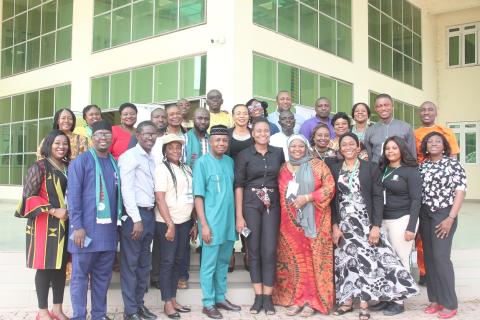
L-R: (5th left) Prof. Ukoha Igwe
A former Librarian of the 水果派 of Nigeria (NOUN), Prof. Ukoha Igwe, has said that technology is a fundamental part of development which makes day-to-day life easier especially in regards to information storage.
Igwe stated this at the Gabriel Afolabi Ojo Central Library situated at the university’s headquarters in Abuja, where he was the speaker at a 3-day workshop organised by the Department of Library and Information Science with the theme: 鈥淎cademic Staff Training on 聽LIS e-tools and Continuing Education for Librarianship.鈥�
The workshop was held between聽August聽16-8, 2022聽as聽participants and facilitators stressed the need for technology in the field and applying it to the creation, management and dissemination of information in all formats as well as the adequate training of staff in the adequate use of聽it.
Igwe, who talked on the topic: 鈥�4IR (Industrial Revolution) And Emerging Trends In Library Practice In Africa,鈥� took the audience on a journey of the different eras of industrial revolutions in technology especially as it pertains to library and information science.
He said the landscape of information delivery will undoubtedly continue to change,聽therefore librarians should try and get acquainted with the necessary tools to adapt to the constantly-changing circumstances of new innovations so as to keep libraries steps ahead of聽whatever the future might hold.
The speaker also explained the different technologies that each era of the industrial revolution gifted to mankind to alleviate day-to-day struggles.
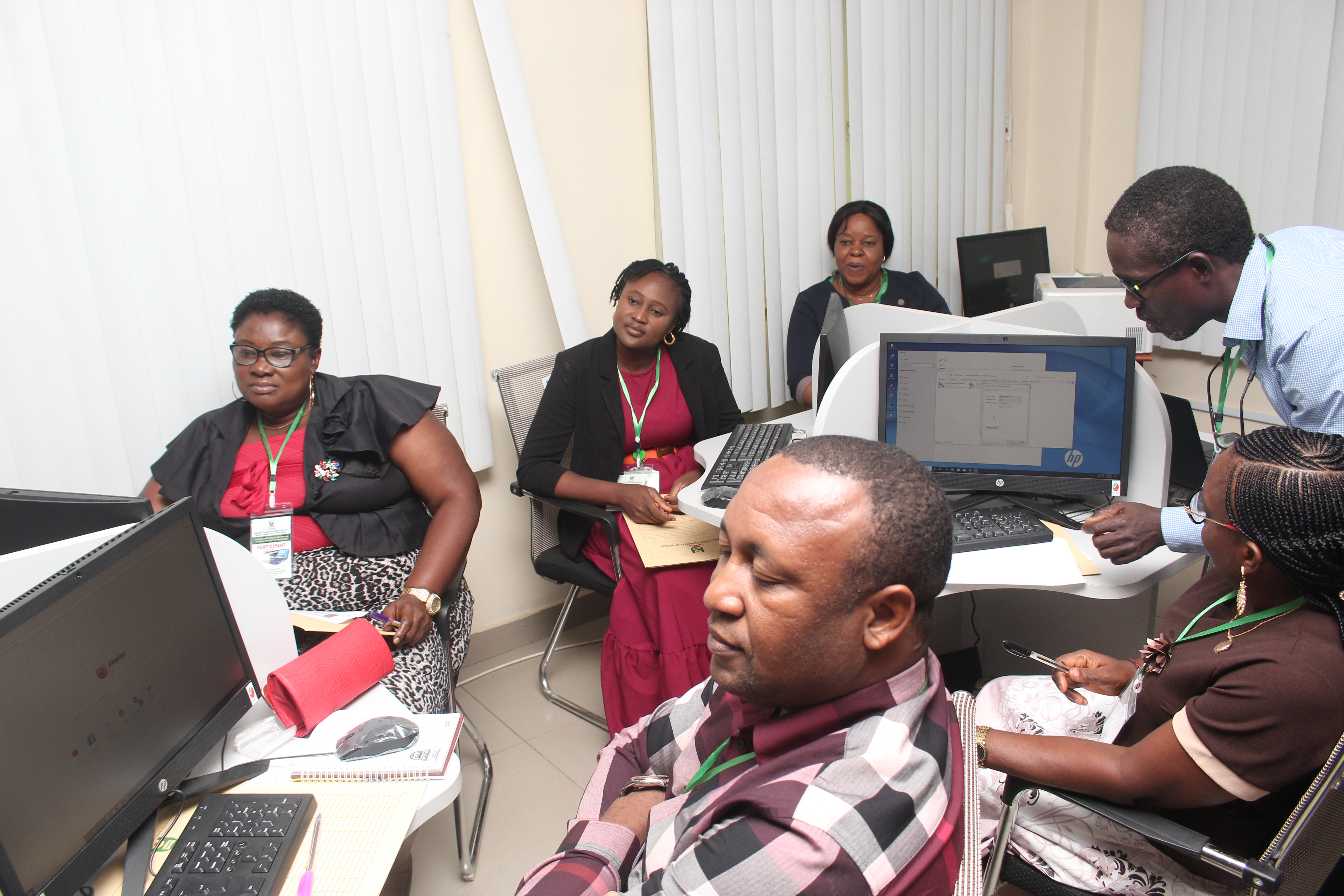
Cross section of participants
鈥淭he first industrial revolution was around the 18th聽Century between the years 1765 -1784 to the beginning of the 19th聽Century and ushered in the inventions of the steam engine that generated a new energy that helped in the manufacturing of the steam engine and aided in accelerating the economy. It was the era that industry became the backbone of societal economy overtaking agriculture.
鈥淭he second industrial revolution was traced to the end of the 19th聽Century around 1870 and was characterised by massive technological advancements that helped in the emergence of electricity, oil and gas, the invention of the auto-mobile and plane and also ushered in the telegram and telephone as methods of communication,鈥� he said.
He also touched on the 3rd industrial revolution,聽which, according to him,聽started around 1969 and the technologies it created like opening the doors to space expeditions, research and biotechnology, the rise of electronics, telecommunications and computers and robots.
Igwe then spoke on the 4th industrial revolution characterised by the novel way hardware, software and connectivity that are being integrated to achieve very ambitious goals, stressing that it was amazing how one could use technology to collect and analyse vast amount of data, the seamless interactions of intelligent machines and the blurring of the physical and virtual dimensions of production.
The Head of Department, Library and Information Science, Dr. Ugonna Aliakhu,聽in her speech,聽thanked the participants for attending the seminar and聽expressed her happiness 聽for participants for seeing聽the importance of learning new technologies that will significantly reduce any complications pertaining to their work.
She urged them to take the training seriously as technology聽is聽the future and no one or entity especially a technologically-driven institution such as NOUN will want to be left out in the technological revolution embraced around the world.